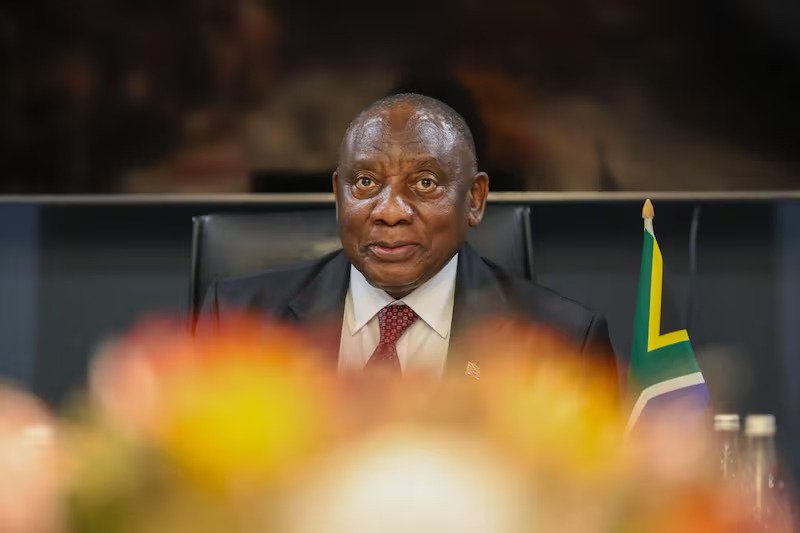
Johannesburg — Les tensions diplomatiques entre l'Afrique du Sud et Washington ont pris une nouvelle dimension cette semaine, après l'exclusion du président Cyril Ramaphosa de la première réunion des sherpas du G20 organisée sous la présidence américaine. Le G20 Snub, confirmé par de hauts responsables à Pretoria, marque une escalade nette dans un différend qui couve depuis le retour au pouvoir de l'administration Trump. Alors que l'attention mondiale se tourne vers le prochain sommet du G20 accueilli par l'Afrique, cet affront risque de rebattre les cartes géopolitiques et de mettre à l'épreuve les normes de coopération multilatérale.
L'Afrique du Sud a qualifié la chose d'"inédite" et de "violation directe des protocoles du G20", tandis que les États-Unis affirment que la participation se fait sur invitation et peut refléter des "priorités stratégiques". Derrière ce langage diplomatique se cache un message clair : les relations entre les deux pays traversent l'une de leurs passes les plus difficiles depuis des années.
Ce qui a mené au G20 Snub
La controverse a éclaté lorsque des invitations ont été envoyées pour une réunion de sherpas à Washington — des réunions cruciales où de hauts responsables des nations du G20 coordonnent les politiques et la logistique. Ces sessions définissent l'ordre du jour des sommets plusieurs mois à l'avance.
Contrairement aux transitions précédentes du G20, la présidence sud-africaine n'y était pas représentée, et Pretoria affirme n'avoir reçu aucune notification de ce changement. Traditionnellement, les hôtes sortants conservent un rôle central durant les premières phases de transition, assurant la continuité des politiques et la mémoire institutionnelle.
Selon des sources, la décision américaine était délibérée. Plus tôt cette année, l'Afrique du Sud avait refusé de reconnaître un "envoyé junior" désigné par les États-Unis lors des transitions cérémonielles du G20, insistant sur le fait que le maillet ne pouvait être remis qu'à un haut responsable. Washington a interprété cela comme un affront politique, alors que Pretoria y voyait un simple respect du protocole.
La réaction officielle de l'Afrique du Sud
La présidence sud-africaine a publié un communiqué reconnaissant le G20 Snub tout en appelant au calme :
"L'Afrique du Sud continuera de participer pleinement à tous les engagements prévus du G20, dans la mesure où les normes mondiales le permettent."
Un conseiller gouvernemental de haut rang, s'exprimant sous couvert d'anonymat, a qualifié l'exclusion de "profondément préoccupante", soulignant que les forums multilatéraux reposent sur l'égalité de traitement. "Si les grandes puissances commencent à écarter les autres, le G20 risque de perdre sa crédibilité", a-t-il déclaré.
Pretoria préparerait une note diplomatique pour demander des éclaircissements au département d'État américain. La réponse de Washington reste incertaine.
Les dirigeants africains affichent leur solidarité
Le G20 Snub a fait l'effet d'une onde de choc sur le continent. Les dirigeants du Kenya, du Nigeria et du Ghana ont apporté leur soutien à l'Afrique du Sud, avertissant que cette exclusion fragilise le rôle croissant de l'Afrique dans la gouvernance mondiale.
Selon des analystes, cette décision risque de rapprocher les économies africaines de la Chine et de la Russie, qui cherchent depuis longtemps à étendre leur influence sur le continent. "Les États-Unis ont créé un vide", a déclaré le professeur Thandi Moeketsi, spécialiste de politique étrangère à l'University of the Witwatersrand. "La Chine sera ravie de le combler."
La position américaine
Washington n'a fourni aucune explication détaillée sur l'exclusion de l'Afrique du Sud, mais des responsables ont évoqué des "domaines d'alignement" comme facteur influençant la participation. Selon des observateurs, le G20 Snub semble lié à :
- Le refus de l'Afrique du Sud de condamner la Russie à l'ONU
- Ses liens commerciaux étroits avec la Chine
- Son rôle de premier plan au sein des BRICS
- Ses critiques de la politique étrangère américaine au Moyen-Orient
L'administration Trump a ouvertement remis en question l'"orientation géopolitique" de l'Afrique du Sud, ce qui a accentué les tensions diplomatiques.
Les répercussions sur le prochain sommet de Johannesburg
Les réunions de sherpas ne sont pas de pure forme ; elles déterminent tout, des priorités de l'ordre du jour à la logistique. Le G20 Snub fait peser plusieurs risques sur l'Afrique du Sud :
Une influence réduite sur l'ordre du jour
L'Afrique du Sud pourrait avoir du mal à faire avancer ses priorités clés, notamment le financement climatique, l'allègement de la dette et la réforme commerciale.
Une image de faiblesse
Les médias pourraient dépeindre Johannesburg comme mal préparée à accueillir un sommet de cette envergure.
Des défis logistiques
L'absence lors des premières sessions de planification pourrait affecter la coordination aérienne, la cartographie sécuritaire et la gestion des délégations.
Des retombées politiques
Les partis d'opposition en Afrique du Sud ont déjà critiqué le gouvernement pour sa "diplomatie irresponsable".
L'avis des experts
Des analystes avertissent que le G20 Snub pourrait provoquer un réalignement des alliances stratégiques de l'Afrique du Sud. Le professeur Leonard Jacobs du Centre for Global Relations a déclaré :
"Cela pourrait accélérer l'engagement de l'Afrique du Sud auprès des puissances non occidentales, notamment la Chine et la Russie, si les États-Unis continuent d'utiliser les forums multilatéraux comme levier de pression."
D'autres estiment que les États-Unis pourraient assouplir leur position avant le sommet de Johannesburg pour faciliter la coordination.
La suite des événements
L'Afrique du Sud prévoit d'envoyer une délégation diplomatique à Washington. L'Union africaine a également indiqué sa disposition à servir de médiateur. En parallèle, les préparatifs du sommet du G20 à Johannesburg se poursuivent, les autorités aéronautiques intensifiant leur planification pour s'assurer que le premier sommet du G20 de haut niveau organisé en Afrique se déroule sans accroc.
Les responsables insistent sur le fait que l'Afrique du Sud ne se retirera d'aucune obligation à venir au sein du G20, maintenant son engagement en faveur de la coopération multilatérale malgré le G20 Snub.
Conclusion
Le G20 Snub marque un tournant dans les relations entre les États-Unis et l'Afrique du Sud, révélant des tensions géopolitiques plus larges et la fragilité de la coopération mondiale. Alors que Washington défend une participation sélective, l'Afrique du Sud revendique un engagement total et le respect de l'intégrité multilatérale. À l'approche du sommet de Johannesburg, le monde entier observera de près si ce fossé diplomatique peut être comblé, ou s'il annonce un avenir plus compétitif et fragmenté pour le G20.