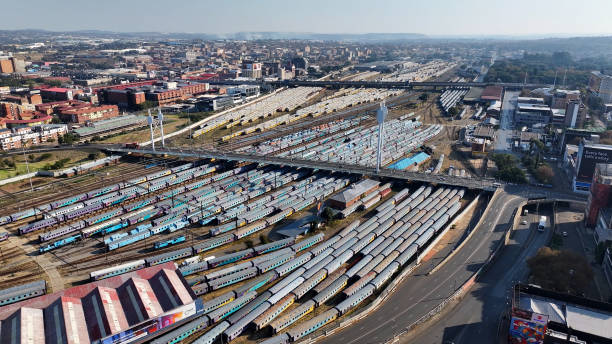
Dans un accord ferroviaire transfrontalier marquant, 46 locomotives diesel-électriques de la flotte de KiwiRail, en Nouvelle-Zélande, sont en route vers l'Afrique du Sud, où l'opérateur privé Traxtion va les moderniser et les redéployer sur des corridors de fret très fréquentés.
Ce programme de matériel roulant de 3,4 milliards de rands montre comment des actifs excédentaires dans un réseau ferroviaire peuvent trouver une seconde vie dans un autre, tout en soutenant la réforme et le redressement d'un réseau sous forte pression.
Comment fonctionne l'accord KiwiRail–Traxtion
KiwiRail est en plein renouvellement de sa propre flotte de locomotives, ce qui a créé une opportunité pour Traction d'acquérir un grand lot d'unités compatibles. Dans le cadre de cet accord ferroviaire, Traction achètera :
- 42 locomotives U26C partiellement modernisées
- 4 locomotives C30-8MMI entièrement modernisées
Toutes sont des unités diesel-électriques Wabtec conçues pour l'écartement du Cap, le même que celui utilisé en Afrique du Sud.
Pour KiwiRail, cette vente permet de libérer des capitaux et de l'espace en atelier, au moment où elle introduit de nouvelles locomotives sur son propre réseau.
Pour Traction, c'est l'occasion de se procurer en grande quantité des locomotives à voie étroite de haute qualité — ce qui est rarement possible sur le marché mondial.
Modernisation en Afrique du Sud, pas seulement réutilisation
Une fois arrivées en Afrique du Sud, les locomotives subiront une mise à niveau importante au Rosslyn Rail Services Hub de Traxtion.
En collaboration avec Wabtec, Traction va mettre à niveau les unités U26C selon les spécifications C30MEI, notamment :
- De nouveaux moteurs 7FDL-EFI à faible consommation de carburant
- Des systèmes de contrôle Brightstar avancés
- Des composants mécaniques reconditionnés ou remplacés pour prolonger la durée de vie
Cet accord ferroviaire ne porte donc pas sur l'importation de matériel dépassé, mais sur l'utilisation de châssis existants comme base pour une flotte largement renouvelée.
Le programme prévoit également la construction d'environ 920 nouveaux wagons en Afrique du Sud, ce qui renforce l'impact industriel local.
Avantages environnementaux et économiques d'une seconde vie
Réutiliser et moderniser des locomotives plutôt que d'en construire de nouvelles de toutes pièces peut offrir des avantages à la fois économiques et environnementaux.
En modernisant les unités KiwiRail, Traxtion peut :
- Éviter l'empreinte énergétique et matérielle complète liée à la fabrication de 46 nouvelles locomotives
- Réaliser des gains en termes de consommation de carburant par rapport à de nombreuses unités sud-africaines plus anciennes encore en service
- Transférer le fret de la route vers le rail, réduisant ainsi les émissions par tonne-kilomètre et allégeant la pression sur les routes
Pour l'Afrique du Sud, qui s'est engagée à réduire ses émissions tout en cherchant à développer son économie, ce type de projets de seconde vie s'inscrit dans une approche plus circulaire et plus sobre en ressources pour les infrastructures.
Ce que l'accord représente pour la Nouvelle-Zélande
Même si l'attention s'est surtout portée sur la crise logistique sud-africaine, cet accord ferroviaire a aussi son importance pour la Nouvelle-Zélande.
KiwiRail investit dans des locomotives plus récentes dans le cadre d'un plan ferroviaire plus large, et la vente d'unités plus anciennes — mais encore modernisables — à Traction soutient cette transition.
Plutôt que de stocker ou de mettre à la ferraille ces locomotives, KiwiRail peut :
- Monétiser des actifs qui ne correspondent plus à ses besoins à long terme
- Réduire les coûts de maintenance et de stockage
- Contribuer indirectement au redressement des infrastructures d'un pays partenaire
Cette transaction met également en lumière la crédibilité technique de KiwiRail et de Wabtec, dont l'équipement est jugé suffisamment solide pour justifier une seconde vie complète sur un autre continent.
Un modèle pour de futurs accords ferroviaires transfrontaliers ?
Les réseaux ferroviaires à travers le monde font souvent face aux mêmes défis : des flottes vieillissantes, des budgets contraints et une pression croissante pour se décarboner.
L'accord ferroviaire entre KiwiRail et Traction esquisse un modèle où :
- Des locomotives excédentaires mais modernisables dans un pays viennent combler des manques de capacité dans un autre
- La modernisation est réalisée dans le pays d'accueil, soutenant ainsi l'industrie locale
- Les fabricants d'équipements d'origine assurent un soutien technique pour garantir la sécurité et les performances
Si ce modèle fait ses preuves en Afrique du Sud, d'autres réseaux ferroviaires utilisant des écartements et des normes compatibles pourraient envisager des partenariats similaires.
Cela pourrait créer un marché secondaire pour des formules « renouvellement de flotte et seconde vie », notamment entre économies développées et économies émergentes.
Conclusion
L'accord ferroviaire KiwiRail–Traxtion illustre la façon dont les réseaux ferroviaires mondiaux peuvent coopérer de manière pratique et mutuellement bénéfique.
En offrant une seconde vie modernisée à 46 locomotives néo-zélandaises en Afrique du Sud, cette transaction soutient à la fois la réforme ferroviaire, l'industrie locale et les objectifs environnementaux.
Pour l'Afrique du Sud, la flotte modernisée contribuera à combler un grave déficit de capacité de fret et à soutenir les opérations privées sur les grandes lignes réformées.
Pour la Nouvelle-Zélande, cela valide une stratégie de renouvellement de flotte qui considère les locomotives plus anciennes comme des actifs précieux, et non comme des déchets.
Si d'autres réseaux ferroviaires adoptent cette approche, cet accord pourrait être retenu comme le point de départ d'une ère plus circulaire dans le transport ferroviaire lourd, où des locomotives bien construites servent dans différentes régions et sur plusieurs décennies, plutôt que d'être mises au rebut avant que leur plein potentiel soit exploité.