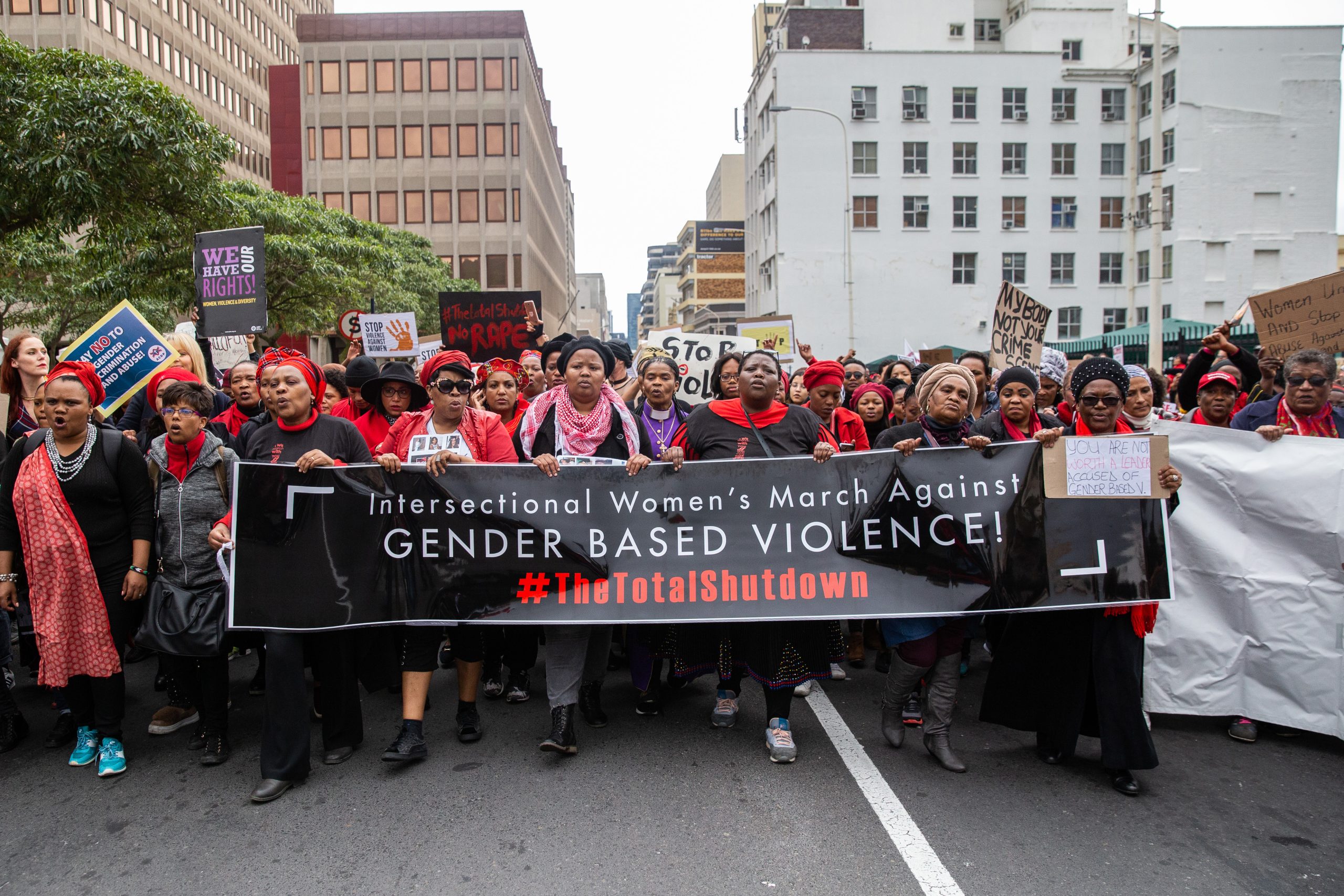
Les récentes manifestations contre la GBV à travers l'Afrique du Sud n'ont pas été qu'un simple arrêt national — elles ont offert une tribune aux survivantes de la violence basée sur le genre (VBG) pour partager leur vécu et exiger une action urgente. De Johannesburg au Cap, de Pretoria à Durban, des femmes de tous horizons ont pris part à des marches pacifiques, des rassemblements et des rencontres communautaires. Ces manifestations ont amplifié la voix de celles directement touchées par les violences, attirant l'attention sur le coût humain de la VBG.
Le président Cyril Ramaphosa s'est adressé à la nation en pleine période de manifestations, précisant qu'aucun nouveau pouvoir d'urgence ne serait introduit. Cette déclaration a suscité des discussions, mais n'a en rien diminué l'impact fort du GBV Protest, qui a mis en avant l'autonomisation des survivantes et la solidarité entre communautés.
Témoignages de survivantes lors des manifestations
La force du GBV Protest résidait dans la parole des survivantes. Beaucoup de femmes ont partagé des témoignages très personnels sur les violences subies, illustrant l'urgence d'agir au niveau national et local :
« Je vis dans la peur depuis des années à cause des violences domestiques. Aujourd'hui, je me tiens aux côtés d'autres femmes pour réclamer justice », a déclaré Lerato Mokoena, une survivante de Soweto.
« Les survivantes ne devraient jamais se sentir seules. Nos histoires comptent, et nous marchons pour que chacune sache que sa voix a de l'importance », a affirmé Fatima Khan, qui participait aux manifestations au Cap.
« La douleur que nous endurons est invisible pour beaucoup. Cette manifestation nous donne de la visibilité et une tribune pour le changement », a témoigné Nomsa Dlamini, une survivante qui milite pour un renforcement des forces de l'ordre.
Ces témoignages ont mis en lumière les conséquences émotionnelles, psychologiques et sociales de la VBG, tout en rappelant la nécessité d'une réponse à la fois sociétale et gouvernementale.
Ce qui s'est passé lors des manifestations
Le GBV Protest a mobilisé des milliers de personnes à travers l'Afrique du Sud, notamment à travers :
- Des marches pacifiques dans les centres urbains et les espaces publics, qui ont attiré l'attention des médias et sensibilisé le grand public.
- Des sit-in et des actions symboliques devant les bureaux gouvernementaux, soulignant l'exigence de responsabilité.
- Des séances de témoignages, où les survivantes ont partagé leur vécu avec les participants, les journalistes et les audiences sur les réseaux sociaux.
Les manifestations ont conjugué présence physique et engagement numérique, permettant à ceux qui ne pouvaient pas se déplacer de participer quand même, ce qui a élargi la portée et l'impact du mouvement.
Le rôle de la solidarité
La solidarité communautaire était au cœur du GBV Protest :
- Des femmes et leurs alliés ont soutenu les survivantes qui partageaient leur vécu.
- Des familles, voisins et organisations locales ont participé pour montrer que la VBG touche les communautés entières.
- Les réseaux sociaux ont amplifié la voix collective, grâce aux hashtags #GBVShutdown, #EndGenderViolence et #JusticeForSurvivors.
Cette solidarité a aidé à réduire la stigmatisation, à renforcer les survivantes et à installer un sentiment de responsabilité partagée face à la VBG dans la société.
Réponse du gouvernement
Le président Ramaphosa a pris la parole face aux manifestations, soulignant que :
« Nous reconnaissons la voix de celles touchées par la violence basée sur le genre. Si aucun nouveau pouvoir d'urgence ne sera mis en place, nous restons engagés envers les programmes actuels visant la protection, la prévention et le soutien aux survivantes. »
Le gouvernement a mis en place des unités de police spécialisées pour les cas de VBG, des campagnes de sensibilisation et des financements pour le soutien aux victimes. Toutefois, des militants estiment que la mise en œuvre reste inégale, laissant de nombreuses survivantes sans protection ni recours adéquats.
Les défis mis en évidence par les témoignages des survivantes
Les témoignages des survivantes lors du GBV Protest ont mis en évidence des défis systémiques :
- Justice tardive : De nombreux cas de violence subissent de longs délais au niveau du signalement, de l'enquête et des poursuites judiciaires.
- Services de soutien insuffisants : Les refuges, les services de counseling et les programmes de réhabilitation sont souvent insuffisants ou inaccessibles, surtout dans les zones rurales.
- Stigmatisation culturelle : Les normes sociales et les tabous empêchent souvent les victimes de s'exprimer ou de chercher de l'aide.
- Traumatisme émotionnel : Les survivantes continuent de faire face à des difficultés psychologiques, souvent aggravées par le manque de soutien en santé mentale.
En plaçant ces questions au centre, les manifestations ont attiré l'attention sur les lacunes des réponses sociétales et gouvernementales face à la VBG.
Impact sur la sensibilisation du public
Le GBV Protest a réussi à sensibiliser une partie plus large de la société :
- Des citoyens ont partagé témoignages et images sur les réseaux sociaux, amplifiant le mouvement à l'échelle nationale.
- Des débats publics ont émergé sur la responsabilité culturelle, juridique et sociale dans la lutte contre la VBG.
- Des communautés ont entamé un dialogue sur la prévention, l'intervention précoce et les mécanismes de soutien aux survivantes.
En reliant les expériences personnelles aux problèmes systémiques, les manifestations ont contribué à forger une vision publique plus informée et plus empathique face à la VBG.
Les revendications des survivantes
Au cours des manifestations, les survivantes ont formulé plusieurs revendications essentielles :
- Justice et responsabilité : Des procédures judiciaires plus rapides et des peines plus sévères pour les auteurs de violence.
- Services de soutien accessibles : Davantage de refuges, de centres de counseling et de programmes de réhabilitation.
- Éducation et sensibilisation : Des programmes pour remettre en cause les normes sociales néfastes et prévenir la violence.
- Initiatives d'autonomisation : Favoriser l'engagement communautaire et les programmes de défense des droits des survivantes.
Ces revendications rappellent que lutter contre la VBG ne se limite pas à la législation, mais exige une approche globale qui tient compte des dimensions sociales, psychologiques et culturelles.
Le rôle de la société civile et des militants
Les organisations de la société civile ont joué un rôle central dans le GBV Protest :
- Soutenir les survivantes pour qu'elles puissent partager leur vécu en toute sécurité et publiquement.
- Coordonner les marches, les sit-in et les campagnes de sensibilisation.
- Plaider pour la responsabilité et la réforme des politiques publiques aux niveaux national et local.
Leur travail a fait en sorte que les survivantes ne soient pas simplement présentes lors des manifestations, mais au cœur de leur message, soulignant l'importance du vécu dans l'élaboration des solutions.
Quelle suite après les manifestations ?
Après le GBV Protest, plusieurs développements sont attendus :
- Plaidoyer continu : Des survivantes et militants prévoient de rencontrer des décideurs politiques pour proposer des réformes et des solutions.
- Engagement communautaire : Des ateliers, séances de counseling et programmes éducatifs continueront à sensibiliser et à offrir du soutien.
- Suivi des politiques publiques : La société civile maintiendra la pression sur le gouvernement pour une mise en œuvre effective des réformes.
- Initiatives d'autonomisation : Les programmes destinés aux survivantes, notamment le mentorat et les réseaux d'entraide, sont en cours de renforcement.
Ces actions visent à garantir que les manifestations débouchent sur un changement durable et à long terme, tant pour les survivantes que pour les communautés.
L'impact humain des manifestations
Le GBV Protest a placé le vécu des survivantes au cœur de l'attention nationale, mettant en lumière l'impact émotionnel et social de la violence basée sur le genre :
- Des survivantes ont dit se sentir renforcées et reconnues grâce à la solidarité publique.
- Des communautés ont engagé le dialogue, favorisant l'empathie et la compréhension.
- Les manifestations ont créé des réseaux de soutien, permettant aux victimes d'accéder à des ressources et à de l'aide.
En se concentrant sur les témoignages personnels, le mouvement a rappelé que la VBG n'est pas une question abstraite, mais une crise profondément humaine qui touche les femmes, les familles et les communautés.
Conclusion
À l'échelle nationale, le GBV Protest a démontré la force de la parole des survivantes et de la solidarité communautaire pour sensibiliser et exiger une action contre la violence basée sur le genre. Des femmes de tout le pays se sont réunies pour partager leur vécu, réclamer justice et appeler à des changements concrets dans les politiques publiques et la société.
Si le gouvernement a précisé qu'aucun nouveau pouvoir d'urgence ne serait mis en place, les manifestations ont haussé le débat autour de la VBG, mettant en évidence les lacunes systémiques et la nécessité d'un soutien global aux survivantes. En plaçant les expériences humaines au premier plan, le GBV Protest veille à ce que les voix de celles directement touchées soient entendues, reconnues et suivies d'effets.
Cette mobilisation historique confirme qu'un changement durable contre la VBG exige à la fois une réforme des politiques publiques et l'autonomisation des survivantes, prouvant que la solidarité sociale est une force essentielle dans la lutte contre la violence basée sur le genre en Afrique du Sud.